News analysis | September 24, 2026
New York City and Los Angeles are restricting student access to generative AI. Former employees report cuts at education AI companies. The research points to a more demanding question: when does the technology help children learn, and when does it do the learning for them?
The promise was irresistible: a personal tutor for every child, less paperwork for every teacher, and a classroom where help would never be more than a question away. This September, two enormous school systems delivered a much less enthusiastic message to the artificial intelligence industry: access to children’s learning time has to be earned.
New York City announced a one-year moratorium on student-facing generative AI from 2-K through eighth grade. Los Angeles Unified is restricting student access to generative AI on district-issued devices across grade levels while it reviews its approach. The policies differ, but together they challenge the assumption that putting more AI into schools is automatically progress. Sources: NYC’s September 2 announcement and NBC Los Angeles’s district coverage.
At the same time, public accounts from former employees at MagicSchool and SchoolAI describe layoffs. Those statements offer evidence of staffing cuts, not proof that either company is failing or that school restrictions caused the reductions. They nevertheless complicate the story of an industry whose visibility and ambitions can make expansion appear inevitable.
The scientific picture is equally resistant to a simple slogan. Carefully designed AI instruction has produced learning gains in some randomized trials. Another experiment found that access to a relatively unrestricted chatbot improved assisted practice but hurt performance when students later worked without it. The issue is no longer whether an AI system can produce an impressive answer. It is whether the student can.
This is the education AI reckoning: a collision between commercial momentum, public responsibility and evidence that remains specific to particular tools, learners and teaching conditions. A sweeping claim that AI helps all children would overstate the research. So would the claim that nobody has demonstrated any benefit. Schools are being asked to make decisions in the space between those two errors.
What readers need to know about AI in education
- The new bans have boundaries. Restrictions on student-facing generative AI do not necessarily prohibit teacher planning tools, every adaptive learning program or assistive technology.
- Layoff reporting requires attribution. Former employees have publicly described job losses at MagicSchool and SchoolAI; this article does not establish an audited total or companywide financial condition.
- Learning outcomes vary. Evidence of benefit or harm applies to the tested intervention. It cannot automatically be transferred to every chatbot, age group or classroom.
- Finished work is an incomplete measure. Schools need to know what students remember, explain and apply when assistance is removed.
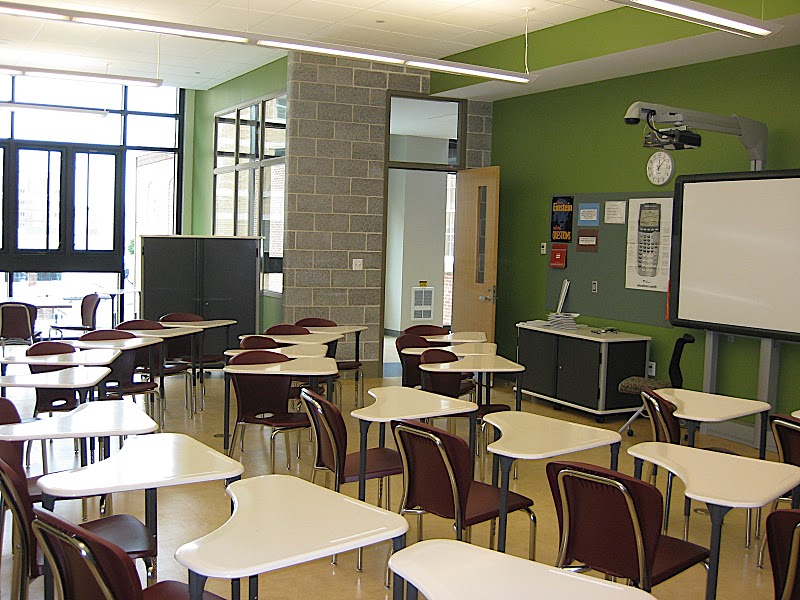

New York City puts younger students first in its AI moratorium
New York’s September 2 announcement applies to nearly 600,000 students, according to the mayor’s office. The one-year restriction covers student-facing generative AI in 2-K through eighth grade during the 2026–27 school year. Officials framed the decision around human relationships, independent problem-solving and the developmental needs of younger learners. That is a policy judgment about acceptable classroom risk, not a finding that every AI product has been proven harmful. Read the city’s announcement.
The district’s guidance preserves limited, vetted high school uses, including approved pilots and supervised career-readiness activities. It also requires two 45-minute AI literacy modules for high school students. Assistive technology provided through an Individualized Education Program or 504 Plan is excepted, and the district says students with disabilities and English learners will retain necessary tools. Read NYC Public Schools’ operational guidance.
That structure matters. Learning about AI and routinely relying on AI are different educational choices. A student can study how a system generates plausible text, compare its claims with trustworthy sources and discuss bias without being asked to outsource a writing assignment. Teaching critical literacy does not require treating a chatbot as the default source of help.
For families, the practical question is what changes inside an actual lesson. If a child previously used a chatbot to brainstorm a response, what will replace it? More discussion, teacher feedback and independent drafting could make a restriction educationally productive. Simply removing a website without changing an assignment would leave much of the underlying teaching problem untouched.
A moratorium also creates a responsibility for the district. The year needs a purpose beyond postponement. Families and educators should be able to see what evidence is being collected, what conditions would justify a carefully bounded pilot and how the district will evaluate its own restrictions. A pause is a policy tool. Its value depends partly on the work completed during it.
Los Angeles blocks student access on district devices
In Los Angeles, the device boundary is central to understanding the news. NBC Los Angeles reported on September 2 that generative AI was unavailable to students using school-issued devices across LAUSD. Board leaders clarified the moratorium during a committee meeting examining classroom AI. The report said students aged 13 and older had previously been able to access generative AI after a guidelines course. Read NBC’s report.
The district’s Board of Education lists the September 2 Generative AI Ad Hoc Committee meeting and supporting materials on its own website. That record helps distinguish the current review from earlier district documents that permitted certain uses. A policy written before this school year should not be mistaken for the full explanation of what students can access now. See the LAUSD committee record.
A block on school-issued devices is consequential because schools control those devices, their settings and the learning activities assigned through them. It does not establish that students have stopped using AI on personal phones or home computers. Describing the measure as the disappearance of AI from children’s lives would misrepresent what an institutional restriction can accomplish.
The implementation challenge therefore has two parts. Schools can set boundaries for the tools they supply and endorse. They also need to teach students how to handle the tools they may encounter elsewhere. Without that second layer, the visible classroom rule and the invisible homework routine can move farther apart.
That gap affects assessment. A polished assignment completed at home may tell a teacher less about independent understanding than a short explanation written in class. More oral discussion, drafts and supervised practice can reveal what a student knows. The purpose should be useful evidence of learning, not a permanent atmosphere of suspicion.
New York and Los Angeles should not be collapsed into a single national ban. Their rules differ in age coverage, permitted activities and implementation. Their shared significance is that prominent public systems are exercising the right to slow deployment while they decide what belongs in a classroom.
Why “AI ban” is too broad to explain classroom policy
The phrase is convenient for a headline and imprecise for a family handbook. Generative AI creates new material in response to prompts. Other educational technologies may classify answers, adjust difficulty, read text aloud or identify patterns without presenting students with an open-ended conversational system. A useful school policy needs to identify the functions it regulates.
Consider four hypothetical situations: a teacher drafts a parent newsletter; a student receives a hint on a mathematics problem; a child asks a companion-style chatbot for emotional advice; and a program reads a passage aloud as an accessibility support. Calling all four “AI use” conceals the differences that matter most to a school.
The relevant questions include who is using the tool, what information goes into it, what the output influences and who checks the result. A teacher can reject an inaccurate lesson draft before students see it. A young learner may lack the background needed to recognize an inaccurate explanation delivered with confidence. The same underlying technology can sit inside very different relationships of responsibility.
Districts also need to separate approval of a product from approval of every feature in that product. A platform may combine ordinary document editing, search, translation and generative assistance. A clear policy tells teachers which functions are permitted for which tasks. A list of brand names alone can quickly become confusing.
For parents, that means the most useful request is a concrete description of the learning activity. What will the child do? What will the software do? What will the teacher observe? Those answers reveal more than either an enthusiastic claim that the school is “AI ready” or a broad assurance that it has “banned AI.”
MagicSchool layoffs: what the public evidence actually supports
The staffing story deserves the same care as the policy story. In a public LinkedIn post, Britta Hurula said she was among employees laid off in a restructuring at MagicSchool. Her account is a firsthand description of her own employment experience and reports that others were affected. It is stronger evidence than an anonymous discussion thread, but it does not establish the total number of positions eliminated. Read Hurula’s public account.
At SchoolAI, Haley Winterton publicly described being part of recent layoffs. Avery Balasbas also wrote that he had been laid off from the company. These accounts support reporting that former employees described job losses at another prominent education AI business. They do not establish a common cause across the two companies. Sources: Winterton and Balasbas.
This article does not present circulating percentage estimates as verified headcounts. It also does not claim that district bans caused the layoffs, that either company is insolvent or that a staffing reduction proves an educational product does not work. No direct company comment was obtained for this article. The available employee accounts cannot answer every financial or strategic question.
The contrast with the industry’s growth story is still notable. MagicSchool announced a $45 million Series B in February 2025, led by Valor Equity Partners. Its announcement described plans to expand product, engineering and customer experience capacity and emphasized long-term stability for schools. Those were company statements at the time, not an independent assessment of its current finances. Read MagicSchool’s funding announcement.
A funding round measures investor commitment. A layoff measures a change in staffing. Neither is a student outcome. For school buyers, the useful response is to ask about implementation support, product maintenance, response times and continuity. A school that depends on a service needs to know whether promised support remains available, regardless of the company’s most recent funding headline.
The business question schools should ask after the hype
A classroom technology purchase has several audiences. Students need a useful learning experience. Teachers need something they can manage. Technology staff need a service they can administer. District leaders need a defensible reason to spend public money. Investors may be evaluating an entirely different set of indicators.
Those interests can align, but alignment should be demonstrated. A product that attracts many signups may be helpful, entertaining, heavily promoted or easy to try. Registration counts alone cannot tell a board whether students learn more, whether teachers continue using it after the novelty wears off or whether the service is worth renewing.
The same caution applies to usage dashboards. More prompts, more minutes and more generated documents can signal activity without showing educational value. A tool might deserve credit for helping a teacher finish a necessary task in less time. Another might increase time on a platform while reducing time spent discussing, reading or making something with classmates.
Districts can make the purchasing conversation more concrete by defining the problem before evaluating the product. A school seeking faster feedback on low-stakes practice needs different evidence from one seeking better reading comprehension. A tool designed for teacher preparation should not acquire a student-learning claim merely because it is used in a school.
There is also an opportunity-cost question. Time spent training staff, reviewing generated materials and administering accounts is time unavailable for other work. A product can be inexpensive per license and expensive to implement. A higher-priced intervention might still be worthwhile if it produces a meaningful benefit with manageable demands.
The strongest procurement case connects a specific need, a bounded use, credible evidence and a practical evaluation plan. That standard is demanding for vendors. It is also fairer than treating every AI company as either the future of education or a symbol of everything wrong with it.
The clearest warning: better homework can hide weaker learning
A randomized field experiment by Hamsa Bastani and colleagues, published in PNAS in 2025, studied nearly 1,000 high school mathematics students. It compared an ordinary GPT-4-based interface, a tutor designed with instructional safeguards and a control condition. Access to AI improved performance during assisted practice. But when assistance was removed, the ordinary-interface group performed 17 percent worse relative to the control group on the unassisted examination. That is a relative difference, not a 17-percentage-point drop. Read the study.
The guarded tutor largely avoided the negative effect, but its unassisted results were not statistically distinguishable from the control group. The experiment does not prove that all AI tutoring harms learning. It demonstrates that the design of assistance can change what happens after assistance ends. The published correction concerned an author affiliation, rather than the reported learning results. Read the correction.
For a school, the distinction is immediate. Imagine a student who completes ten algebra problems with a system supplying each next step. The worksheet can look excellent even if the student has not learned when to choose a method or how to recover from an error. Completion and competence can travel in different directions.
That is why an evaluation should include an independent task. The student should encounter a new problem, explain the approach and show enough reasoning for an educator to assess understanding. If the only evidence comes from work produced while the tool is available, the school risks measuring the combined performance of student and software while claiming to measure the student.
This does not make assisted practice worthless. Feedback and worked examples have legitimate teaching roles. The issue is whether assistance is structured so that responsibility gradually returns to the learner. A tool that is excellent at finishing work may need deliberately different behavior to be useful at teaching.
The counterevidence: AI tutors can improve learning under specific conditions
A 2025 randomized study by Greg Kestin and colleagues in Scientific Reports found that students learning selected university physics material with a carefully designed AI tutor achieved greater learning gains than students in the comparison active-learning lessons. The system incorporated instructional design, structured problem sequences and prepared solutions. This was evidence for a particular intervention in higher education, not a demonstration that an ordinary chatbot can replace a K–12 teacher. Read the full study.
That result matters because it rules out an easy dismissal: there is credible experimental evidence that generative AI can contribute to learning. Its limits matter just as much. University learners, a defined physics lesson and a purpose-built tutoring environment do not reproduce the conditions of an elementary classroom or a year of independent homework.
Another randomized evaluation examined a six-week, teacher-guided after-school program in Nigeria using generative AI to support secondary students’ English learning. The World Bank working paper reported positive effects, including a 0.24-standard-deviation gain in English skills and a 0.21-standard-deviation gain on a broader end-of-year English examination. The program combined scheduled sessions, curriculum-aligned activities, computer access, teachers and AI. Read the working paper.
The treatment was therefore a program, not just a login. Its results support further investigation of that program model. They cannot isolate every contribution of the technology from the contribution of additional supervised learning time, nor establish the same effect in a different educational setting.
For school leaders, these studies offer a productive standard of comparison. Ask what exactly was tested, what learners did, what the alternative was and how learning was measured. The question is not whether a paper contains the phrase “AI tutor.” It is whether the intervention resembles the one a district is considering.
Helping the adult may be a different path to helping the child
The Tutor CoPilot research offers another model. Instead of asking AI to take over the tutoring relationship, the system supplied guidance to human tutors. In a randomized study involving 900 tutors and 1,800 K–12 students, researchers reported that students whose tutors had access to the system were four percentage points more likely to master topics. Gains were larger among students working with lower-rated tutors. The paper also identified limitations, including suggestions that were not appropriate for a student’s grade level. Read the research paper.
The broader implication is a design choice, not a promise that every adult-facing tool works. An adult can interpret a suggestion, reject it and adapt it to a child. That creates an opportunity for professional judgment to stand between the model and the learner. It also creates a responsibility to ensure the adult has time and knowledge to exercise that judgment.
Teacher workload is another distinct outcome. A 2025 Walton Family Foundation–Gallup survey of 2,232 public school teachers found that weekly AI users estimated saving an average of 5.9 hours a week. That is a self-reported estimate among regular users, not a randomized finding that every teacher will save the same amount of time. Read Gallup’s findings and methods.
Time saved can matter on its own. A teacher who spends less of an evening formatting a document may benefit even if a student test score does not immediately change. But the next claim requires separate evidence. Saving preparation time, improving material quality and improving student learning are related possibilities, not interchangeable outcomes.
A district can evaluate them separately: did the task take less time after review, was the result accurate and appropriate, and did the classroom use help students? This avoids both dismissing practical benefits and using practical benefits to justify claims the evaluation never tested.


What remains unknown about AI’s long-term effects on children
The strongest defensible conclusion is narrower than either side’s favorite headline: some implementations have helped learners in measured settings, and some have undermined independent performance. Those findings do not add up to a settled verdict about the long-term consequences of widespread generative AI use throughout childhood.
A short intervention cannot establish how years of routine assistance will affect a student’s willingness to begin a difficult task, tolerate uncertainty or revise an idea. Those are questions for sustained research. They should not be converted into confident claims of either permanent cognitive damage or guaranteed intellectual improvement.
The measurement problem is substantial. A test immediately after a lesson can detect near-term understanding. A later test can examine retention. A different kind of problem can examine transfer. An observation of classroom discussion can reveal participation and reasoning. None of these measures alone captures everything a school means by a good education.
There is also no single “child user.” A teenager with strong background knowledge may challenge a flawed answer. A beginning reader may struggle to judge the same explanation. Students differ in language, prior learning, disability-related needs and the support available around them. An average result can conceal meaningful differences in who benefits.
That uncertainty does not require paralysis. It requires matching the strength of the claim to the strength of the evidence. A promising pilot can justify another carefully monitored pilot. It cannot, by itself, justify calling an entire product category proven, safe for every age or ready to replace a relationship that the study never attempted to replace.
Students are using AI faster than schools are explaining it
RAND reported in March 2026 that the share of surveyed middle school, high school and college students using AI for homework rose from 48 percent in May 2025 to 62 percent in December. The increase was driven largely by middle and high school students. This measures reported use, not whether the use helped them learn or complied with school rules. Read RAND’s report summary.
An earlier RAND study found a gap between adoption and guidance. More than 80 percent of students reported that teachers had not explicitly taught them how to use AI for schoolwork. Half worried about being falsely accused of using it to cheat. Those findings help explain why clear assignment-level expectations matter alongside district policy. Read RAND’s 2025 research.
A student should not have to guess whether asking for a definition, generating an outline and submitting generated paragraphs are treated alike. Teachers can make the boundary concrete by naming permitted assistance, explaining the purpose of the assignment and requiring students to describe significant help they received.
That approach also makes enforcement more credible. If the purpose is to see independent sentence construction, the rule should say so. If the purpose is to critique a generated answer, AI use may be part of the task. A consistent explanation of the learning goal is easier to understand than a rule that changes without explanation.
Students need room to ask honest questions before they make mistakes. A school culture where uncertainty automatically looks like misconduct can discourage disclosure. Clear expectations and visible work processes offer a better basis for trust than assuming that polished writing proves unauthorized assistance.
The questions parents deserve to have answered
Parents do not need a technical vocabulary to ask good questions about classroom AI. They need a description of the activity and a person responsible for it. The most revealing opening is often simple: what will my child be better able to do after using this?
The answer should name a skill, not a platform. “Explain why a fraction procedure works” is an educational objective. “Complete three chatbot activities” describes participation. A school may have a reasonable plan for both, but it should be able to connect them without relying on a vendor’s general claims.
Families also need to understand the role of human feedback. If a generated explanation confuses a child, who sees the problem? Can the teacher review relevant interactions? Is there a straightforward way to report inaccurate or inappropriate material? A reassuring statement about supervision is useful only if someone can explain how supervision actually happens.
Data questions belong in the same conversation. What information does the activity require? Can it be completed without entering a child’s personal details? Who can access the interaction, and how does the school explain retention and deletion? These are practical questions about a service, rather than accusations that a particular vendor is misusing information.
Families should also be told what an alternative looks like when a tool is optional. An alternative that preserves access to instruction is different from leaving a student without meaningful work. Accessibility needs should be considered directly, instead of assuming that the same interface or the same restriction works equally well for everyone.
What a credible school AI pilot would measure
A useful pilot begins with a narrow learning problem. For example, a district might want to know whether supervised hints help students explain a specific mathematics concept. It would then choose an intervention, define the comparison and decide in advance what evidence would count as success.
The comparison matters. A program should not receive credit for the benefits of extra instructional time if the alternative group receives no comparable opportunity. Where practical, schools should compare approaches with similar time and staffing demands, or be transparent about differences that prevent a clean interpretation.
Evaluation should include independent work, a later check and attention to different student groups. It should also record the work required from teachers. A small learning gain achieved through an unsustainable review burden may not justify expansion. A modest tool that reliably supports a difficult teaching task might be more useful than an ambitious one that requires constant repair.
Accuracy and safety need their own evidence. A satisfaction survey cannot establish that explanations are correct. An absence of complaints cannot prove that students encountered no problems. Schools can sample outputs, give teachers a simple reporting route and establish clear conditions for stopping an activity.
A pilot should have an end date and a decision. Continue, revise, expand or stop are all legitimate outcomes. The evaluation loses value if the purchase is effectively permanent before results are reviewed. Treating a negative result as useful information also protects educators from pressure to make every innovation look successful.
These are analytical standards for judging an intervention, not a claim that either New York or Los Angeles has already adopted this exact design. They offer a way to turn a polarized debate into questions a school community can actually answer.
Why human judgment remains central
A teacher sees more than the text a student types. Hesitation, an unfinished explanation, an unexpected question and a conversation with a classmate can all help an educator decide what to do next. An AI system may contribute useful material without taking over responsibility for those decisions.
The distinction becomes especially important when a student’s performance influences consequential choices. A generated recommendation can appear precise while missing context. Educators need the authority to challenge outputs and the information necessary to explain their own decisions. A system should not make accountability harder to locate.
The same principle applies to feedback. Fast comments are helpful only when they address the right problem. A student struggling to organize an argument may need a conversation about the claim, not a polished rewrite that hides the difficulty. Sometimes the best assistance is a question that leaves the student with work to do.
That makes educational design different from ordinary automation. In many office tasks, reducing the effort needed to produce a finished document is the goal. In a learning task, some of that effort is the point. The challenge is to remove unproductive obstacles while preserving the thinking the student needs to practice.
Schools can reasonably disagree about where that boundary lies for different ages and subjects. The disagreement becomes more useful when it focuses on an observable task. Does the tool help the learner notice an error, or silently correct it? Does it invite an explanation, or provide one before the learner has tried?
The disclosure test for classroom AI
One practical test cuts across the debate: could a school comfortably explain this use to students and families before the activity begins? A clear explanation would describe the instructional goal, the assistance allowed and the work students must still do themselves. If that explanation is difficult to write, the activity may need more design.
Disclosure also helps separate experimentation from established practice. Calling an activity a pilot tells families that the school is still evaluating it. Calling it proven implies a stronger evidentiary claim. Labels should reflect the actual state of knowledge, including what the school has learned locally and what it is borrowing from research elsewhere.
The same test applies to student work. A short account of where assistance entered the process can be more informative than a blanket declaration that a project is entirely original. Students can identify an explanation they consulted, a suggestion they rejected or a fact they checked independently. That makes the learning process visible and gives teachers something concrete to discuss. It also keeps responsibility for the final reasoning with the learner, where a meaningful assessment needs it to remain.
What to watch after the school AI backlash
The next important developments will be more specific than another announcement of a partnership or a ban. Watch what districts permit after review, whether they publish reasons for those decisions and how they handle products whose features change. Watch whether classroom evaluations examine independent learning rather than only engagement.
For vendors, the revealing evidence will include support quality, transparent product limits and willingness to participate in independent evaluation. For researchers, it will include replication, longer follow-up and clearer descriptions of which learners benefit under which conditions. For families, it will include whether the school can explain the purpose of an activity in ordinary language.
Staffing reports belong in that picture without becoming a substitute for it. A layoff can justify questions about service continuity. It cannot answer whether a particular lesson works. Similarly, an impressive trial cannot tell a district whether a company will provide dependable support over the life of a contract.
The most consequential change may be a shift in who has to make the case. Schools do not need to prove that every possible use of AI is harmful before declining a purchase or restricting a classroom activity. Vendors and advocates seeking adoption need to show what the proposed use adds.
AI has been slapped down by parts of EDU, but the evidence does not call for a slogan in return. It calls for a higher standard: define the task, protect the learner, test the outcome and keep a responsible adult in charge. The real milestone will be students who can demonstrate what they learned after the screen is closed.
Frequently asked questions
Are schools banning all artificial intelligence?
No. The scope varies by district, age, activity and device. The restrictions discussed here focus on student access to generative AI. Families should consult their own district’s current guidance rather than assume a headline describes every classroom technology.
Did MagicSchool and SchoolAI have layoffs?
Former employees at both companies have publicly reported layoffs in firsthand LinkedIn posts linked above. This article does not verify a total headcount, a percentage reduction or a common business cause.
Is there evidence that AI helps students learn?
Yes, for some specific interventions. Other evidence shows that poorly structured assistance can undermine independent performance. Results depend on the tool, task, learners and implementation; they do not settle the long-term effects of all school AI use.
Reporting note: This article draws on publicly available district materials, research papers, reporting and attributed employee accounts reviewed September 24, 2026. It includes analysis of their implications. It does not include original interviews or direct company responses. Photographs are illustrative and carry public-domain or CC0 permissions, with source links above.
Conversation